You own four hundred games
and you play the same three
Not because the others are bad. Because choosing is work, and it is nine in the evening. This reads every library you already have and answers the one question you were actually asking.
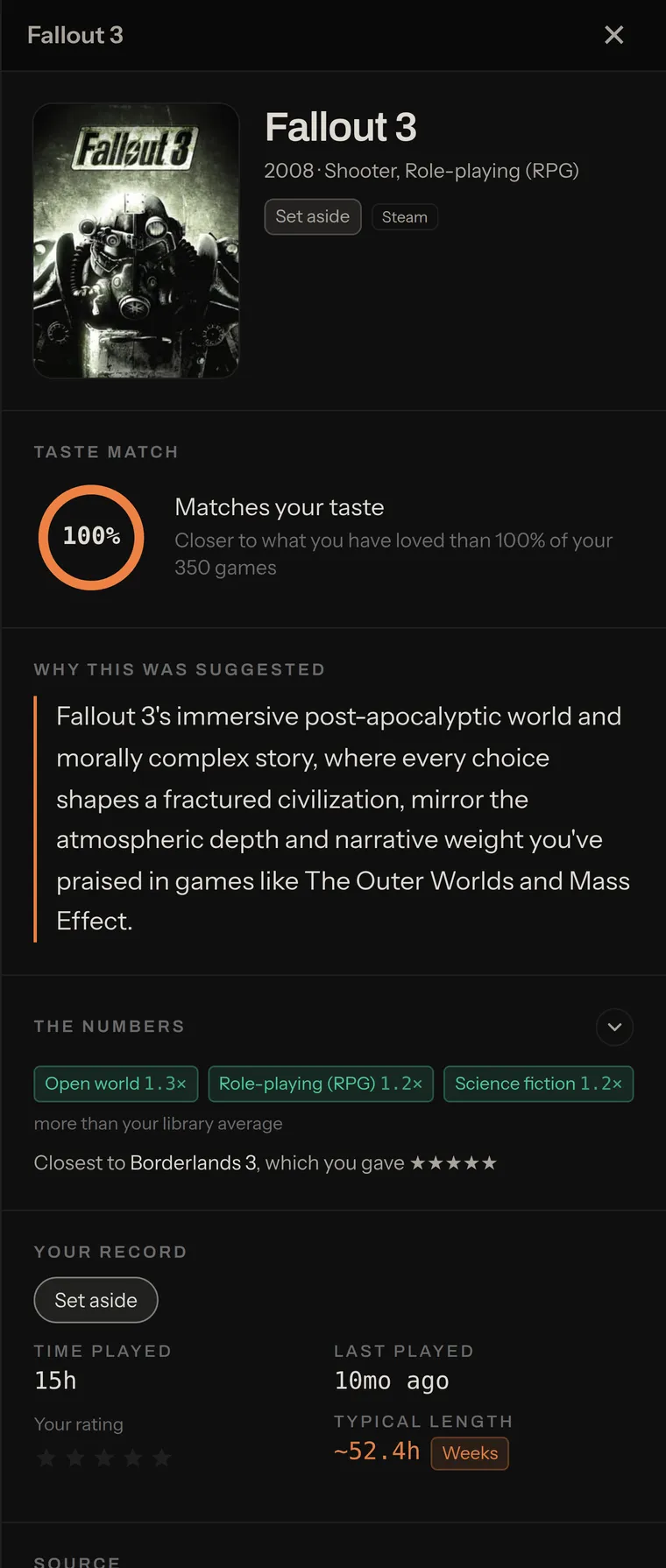
Every suggestion says why
It learns from what you finished and from what you gave up on, then names the game of yours each answer is closest to. Never a review score: what critics loved says almost nothing about what you will.
And when your shelves run out, Tomorrow does the same across games you don't own yet.
Say how you feel, and the shelf answers
Sixty moods, or a sentence of your own: something gentle, to let off steam, a story I can finish. It does not filter anything away: every game is still yours, in a different order, with the ones that fit tonight in front.
How long have you got?
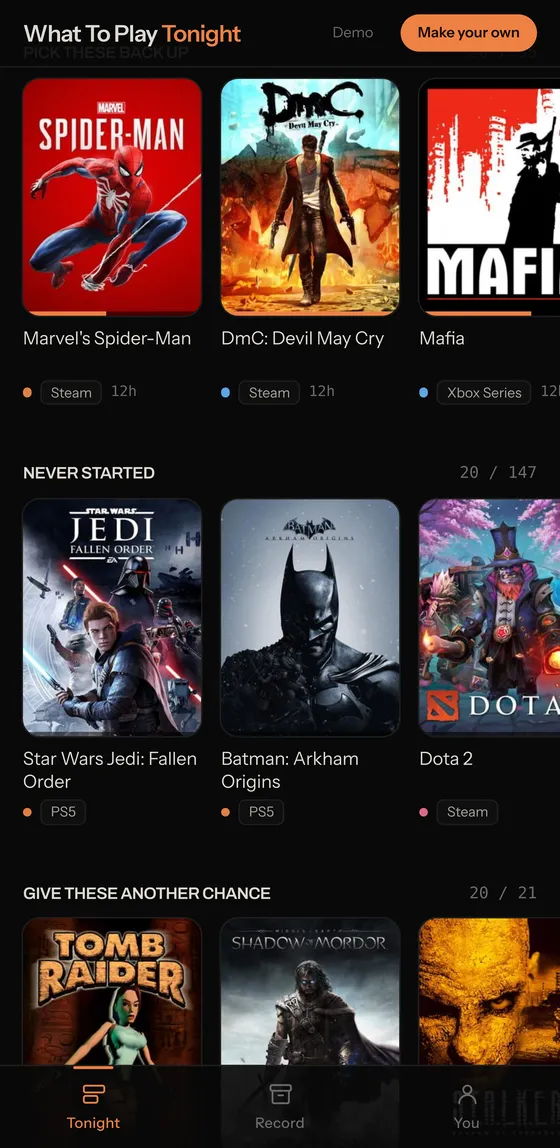
The first thing that decides tonight is not genre or mood. It is whether you have ninety minutes or a fortnight. Every game carries how long it takes, and the shelf is filtered by the evening you are actually having.
And it remembers, with dates
Every trophy and achievement carries the moment it was earned, and nobody wrote those down after the fact. Years of them read as a timeline: what you were playing the summer you remember, and the games that turned out to matter.

Everywhere you play, on one shelf
A game you own twice is one game. Steam needs nothing but the name on your public profile; the consoles need one key each, and the app says where to find it.